Chapel Hart: These Women Flipped Dolly Parton’s “Jolene”… And Broke AGT!
Three Women, One Original Song, and an Unexpected Twist
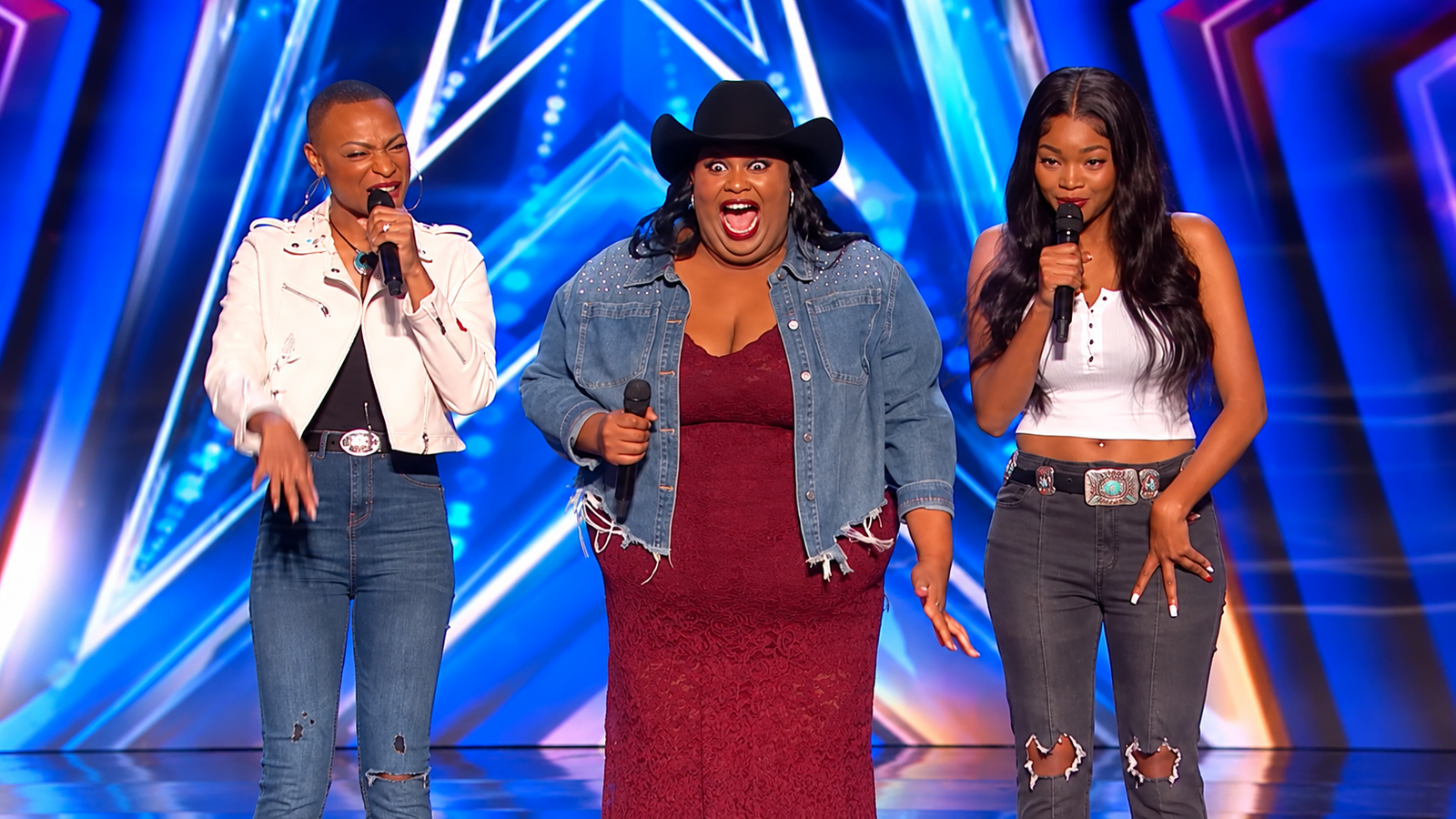
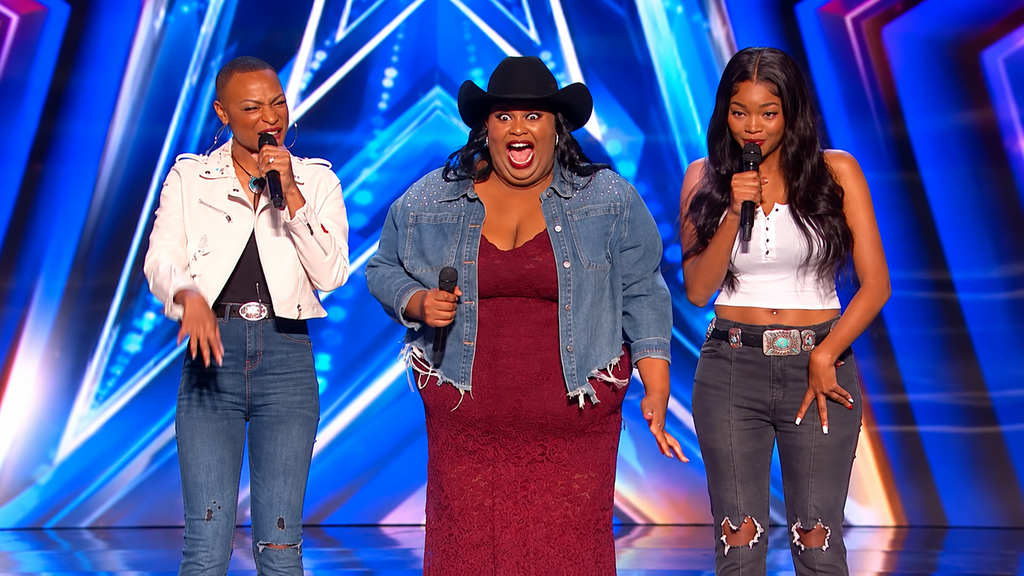
When Danica Hart, Devynn Hart, and Trea Swindle stepped onto the America’s Got Talent stage, they brought something more memorable than a familiar country cover. The three women had an original song inspired by one of the most recognizable stories in country music, a fresh perspective on a classic, and the confidence to deliver it in front of millions of viewers. Their performance soon became one of the most talked-about moments of AGT Season 17.
The trio, known as Chapel Hart, had reimagined the story behind Dolly Parton’s legendary song “Jolene.” In the original, a woman desperately asks another woman not to take the person she loves. Chapel Hart approached the same situation from the opposite direction. Their original song, “You Can Have Him, Jolene,” imagined a woman who had finally decided she was no longer interested in fighting over the same man.
The concept was simple, but that was precisely what made it work. Audiences familiar with Parton’s classic could immediately understand the reference, while Chapel Hart’s lively delivery and confident attitude gave the new song its own personality. Instead of repeating the original story, the trio turned it into a playful declaration of independence.
The audience responded enthusiastically, and the judges recognized that the women had brought something distinctive to the competition. Their harmonies, stage presence, and songwriting helped make the audition stand out from performances built around familiar hits.
Then came the surprise that made the audition even more memorable: all four judges and host Terry Crews joined together to award Chapel Hart a collective Golden Buzzer. The decision sent the trio directly to the live shows, and their performance soon caught the attention of Dolly Parton herself.
For three musicians who had spent years working to establish their careers, this was a major opportunity. Chapel Hart had not simply performed a song that people recognized. They had introduced an original idea, demonstrated their identity as a group, and given a national audience a reason to remember their name.
Who Are Chapel Hart? Meet the Country Trio From Mississippi
Chapel Hart consists of sisters Danica Hart and Devynn Hart and their cousin Trea Swindle. The performers have roots in Poplarville, Mississippi, and their family connection is an important part of the group’s identity. Their shared background helped bring them together, but their musical ambitions extended far beyond performing as relatives.
The trio developed a style built around country music, three-part harmonies, lively arrangements, and original songwriting. Their performances combine the storytelling traditions associated with country music with an energetic approach that allows each member’s personality to come through.
Before appearing on America’s Got Talent, Chapel Hart had already been working toward a career in music. They had released music independently, performed for audiences, and continued looking for opportunities to reach a wider audience. Their appearance on AGT was therefore not the beginning of their musical journey, but a chance to take years of work to a much larger stage.
Breaking into the music industry can be difficult even for talented performers. Artists must develop their sound, find an audience, establish professional connections, and convince people that their music deserves attention. Country music also has deep traditions and established expectations, which can make it challenging for new performers to introduce something different.
Chapel Hart spoke about the difficulties they had experienced while trying to establish themselves in Nashville. They also discussed the challenges of entering a country music industry where they did not always feel represented. Their AGT audition gave them an opportunity to demonstrate their talent and introduce their music on their own terms.
That background helps explain why the audition meant so much to the group. They were not simply hoping to receive a few positive comments from celebrity judges. They wanted people to discover their songs, understand their personalities, and see what they could bring to country music.
Their choice of “You Can Have Him, Jolene” proved effective because it showcased several aspects of the group at once. The song highlighted their harmonies, sense of humor, confidence, and willingness to write original material. Rather than relying entirely on a song audiences already knew, they introduced something new through a familiar cultural reference.
Why Dolly Parton’s “Jolene” Was the Perfect Inspiration
Dolly Parton released “Jolene” in 1973, and the song became one of the defining recordings of her career. Its storyline is direct but emotionally powerful: a woman addresses another woman she fears could take the person she loves. The narrator recognizes Jolene’s beauty and worries that she cannot compete with her.
The song has remained popular across generations because its central conflict is easy to understand. It explores jealousy, insecurity, attraction, and the fear of losing someone important. Parton’s expressive delivery and memorable storytelling helped turn the song into a lasting country classic.
For Chapel Hart, the familiar storyline offered an opportunity to create something new. They imagined how the situation might change if the woman at the center of the story no longer wanted to compete for the same man. Instead of continuing to plead with Jolene, she could simply decide that the relationship was not worth the struggle.
That idea became “You Can Have Him, Jolene.” The title alone signals a different attitude. Where the original narrator is worried about losing someone she loves, Chapel Hart’s narrator is more than ready to walk away. The shift turns the conflict into a humorous, confident response.
The contrast between the two songs is what makes the concept memorable. Parton’s original is built around an emotional plea, while Chapel Hart’s composition offers a playful alternative. The trio did not need to reproduce the original recording to make the connection clear. They used its premise as a starting point for their own story.
Their approach also demonstrates why songwriting can be more interesting than a straightforward cover. A familiar song can attract attention, but an original composition gives performers an opportunity to express their own perspective. Chapel Hart showed that they could take an established idea and develop it into a song with a different personality.
The concept was especially well suited to a television audition. Viewers did not need a lengthy explanation to understand the premise, and the recognizable reference gave the performance an immediate point of connection. The new perspective then provided the surprise.
For fans of Parton, the song offered a playful conversation with a classic. For people hearing Chapel Hart for the first time, it introduced a trio with an identifiable voice and a willingness to take creative risks.
The AGT Audition That Changed Everything
Chapel Hart auditioned during Season 17 of America’s Got Talent in 2022. The judging panel featured Simon Cowell, Howie Mandel, Heidi Klum, and Sofía Vergara, while Terry Crews served as host. Each contestant faced the challenge of making a strong impression in a limited amount of time.
Before singing, the women introduced themselves and talked about their love of country music and their admiration for Dolly Parton. They also explained the idea behind their original song. Their explanation gave the audience a clear understanding of the creative twist, but the performance itself still had to deliver.
When Chapel Hart began “You Can Have Him, Jolene,” the trio quickly established the song’s energy. Their harmonies gave the arrangement a strong foundation, while their delivery brought the humor and confidence of the story to life. Their voices worked together as a group, allowing the performance to feel unified rather than like three separate soloists sharing a stage.
The song’s concept helped them stand apart from many auditioning singers. Contestants often choose familiar songs because they allow judges to evaluate a performance against something recognizable. That strategy can work, but it also creates a challenge: listeners may compare every note with the version they already know.
Chapel Hart took another route. They chose an original song that connected with a familiar story without simply repeating it. The audience could recognize the inspiration and enjoy the new perspective at the same time.
Their performance also required more than vocal ability. The humor needed to feel natural, the harmonies needed to remain tight, and the performers had to communicate the song’s attitude through their stage presence. The trio’s lively delivery helped bring those elements together.
After the song ended, the audience reacted enthusiastically, and the judges shared their excitement. Simon Cowell praised the women and recognized the potential of their act. The discussion also turned to the challenges they had faced while trying to establish themselves in the country music industry.
For Chapel Hart, the audition was an opportunity to show that they had more to offer than an appealing concept. Their original songwriting, group chemistry, and confidence suggested that they could bring a distinctive identity to the competition. The response from the judges soon turned their appearance into a moment they would remember for years.
How Chapel Hart Received a Rare Group Golden Buzzer
The Golden Buzzer is one of the most dramatic features of America’s Got Talent. It gives a selected act a direct route to the live shows, allowing performers to bypass some of the competition stages. Because the opportunity is limited, receiving one can become a defining moment in a contestant’s journey.
Chapel Hart’s Golden Buzzer was unusual because the judges had already used their individual opportunities. Nevertheless, the enthusiasm surrounding the performance led to an extraordinary collective decision.
All four judges and host Terry Crews joined together to award the trio a group Golden Buzzer. The moment reflected how strongly the performance had connected with the people onstage and how much excitement had built around the original song.
For Danica Hart, Devynn Hart, and Trea Swindle, the announcement represented a major breakthrough. They had arrived hoping to move forward in the competition, and now they had a direct path to the live shows. Their audition had introduced their music to a large audience, while the Golden Buzzer gave viewers a reason to follow what happened next.
The award did not guarantee that Chapel Hart would win the season. Every act advancing to the live rounds still had to compete, perform under pressure, and persuade viewers to keep supporting them. However, the Golden Buzzer gave the group valuable exposure and made their audition one of the season’s memorable moments.
A successful talent-show audition often combines several elements: a compelling performance, an emotional or entertaining story, and a moment that viewers want to share. Chapel Hart’s appearance offered all three. Their song had a clear idea, their performance showed strong group chemistry, and the collective Golden Buzzer created a dramatic conclusion.
The moment also helped the trio reach people who might not usually seek out emerging country music. A viewer could discover the group through the audition, become curious about their original recordings, and continue following their journey beyond the television show.
That is one reason a Golden Buzzer can be valuable even when it does not lead to a competition victory. It creates a moment of concentrated attention, and artists can use that attention to introduce their broader work to new listeners.
Dolly Parton Heard Their Song—and Responded
One of the biggest developments following Chapel Hart’s audition came from the artist who inspired it. Dolly Parton publicly praised the trio’s original song, describing it as a fun new take on her classic.
For the three women, that response was especially meaningful. Parton’s “Jolene” was not simply a popular song they had selected at random. Its storyline had inspired them to create their own composition, and hearing the original artist respond positively brought an extra dimension to their AGT experience.
Parton’s response was also playful. She joked about her husband, Carl Dean, and his birthday, saying she would keep him and would not notify Jolene about the occasion. The lighthearted comment matched the spirit of Chapel Hart’s song, which had turned the original conflict into a confident and humorous statement.
The response helped extend the story beyond the show itself. People who followed Dolly Parton could discover Chapel Hart through her reaction, while fans of the trio could celebrate the recognition from an artist they admired.
Reworking the premise of a beloved song can be a risky creative choice. Some listeners have strong attachments to the original and may be reluctant to embrace a new interpretation. Parton’s positive reaction helped frame Chapel Hart’s song as a playful creative response rather than an attempt to replace the original.
The two compositions also have different emotional directions. “Jolene” remains a song about vulnerability and the fear of losing someone, while “You Can Have Him, Jolene” imagines a narrator who is ready to stop competing. That difference is central to the new song’s appeal.
Parton’s acknowledgment added another milestone to Chapel Hart’s growing public profile. They had received a group Golden Buzzer, advanced to the live shows, and attracted attention from the legendary singer whose music had inspired their original idea.
For the trio, the response was not merely a flattering comment. It helped connect their new song with the wider history of country music and showed how an original composition can engage with a classic while still having its own identity.
What Made Chapel Hart’s Performance Different From Other Auditions?
The first strength of Chapel Hart’s audition was the clarity of its concept. Viewers could understand the connection to “Jolene” almost immediately, but the trio offered a different perspective rather than simply repeating the familiar story. That combination of recognition and surprise helped the song stand out.
Their vocal arrangement was another important element. Three-part harmonies can create a rich country sound when singers understand how to blend their voices and support one another. Chapel Hart used their combined vocals to strengthen the song’s energy and create a cohesive performance.
The trio’s personalities also mattered. The song depended on humor and confidence, and their delivery communicated that attitude without making the performance feel overly complicated. The audience could follow the story while enjoying the way the women presented it.
Original songwriting gave the judges a better sense of the group’s identity. A cover can demonstrate vocal skill, but an original song can also reveal how artists think, what stories they want to tell, and how they want to present themselves. Chapel Hart used their audition to show both their musical ability and their creative perspective.
Another advantage was the balance between familiarity and originality. A completely unfamiliar song can sometimes take longer to connect with an audience, while a straightforward cover may struggle to distinguish itself. Chapel Hart used a well-known reference to make their original composition accessible.
The result felt personal to the trio. They were not trying to imitate Dolly Parton or recreate the emotional atmosphere of the original recording. They were using their own voices, experiences, and sense of humor to explore a different side of the story.
That does not mean every original song will lead to a Golden Buzzer. Talent competitions remain unpredictable, and contestants must continue demonstrating consistency in later rounds. Still, Chapel Hart’s audition established a clear identity that viewers could remember.
Chapel Hart’s Journey Through the Live Shows
After receiving the collective Golden Buzzer, Chapel Hart moved directly into the live-show phase of Season 17. The next stage presented a different challenge. A memorable audition can introduce an act to viewers, but the live rounds require performers to maintain attention while competing against other talented contestants.
For their semifinal performance, the trio performed “The Girls Are Back in Town.” The song gave them another opportunity to showcase their country sound, harmonies, and energetic stage presence. It also allowed viewers to see them perform material beyond the song that had made their audition famous.
The live rounds can be demanding because every contestant has limited time to make an impression. Performers must select material that highlights their strengths while showing that they can deliver more than one memorable moment. Chapel Hart had to build on the identity established during their audition and continue connecting with the audience.
The group advanced to the Season 17 finale, where they performed “Something to Talk About” with country artist Darius Rucker. The collaboration offered another major opportunity to perform before a national audience and brought together the trio’s lively style with Rucker’s experience.
Chapel Hart finished in fifth place. They did not win the competition, but reaching the finale represented a significant achievement for a group that had spent years working to establish itself. Their journey had included a standout audition, an unusual collective Golden Buzzer, public praise from Dolly Parton, and a place among the season’s finalists.
Finishing fifth should not be confused with winning, but it also should not diminish what the trio accomplished. A talent competition can introduce artists to new audiences even when they do not take home the grand prize. The exposure can help listeners discover their recordings, follow their performances, and learn more about their musical journey.
For Chapel Hart, the show created a new platform. Their work after AGT would still depend on songwriting, live performances, releases, and the ability to build lasting relationships with listeners. But their audition had given them something valuable: a memorable introduction that made people curious about the group.
The Bigger Message Behind Their Success
Chapel Hart’s audition was entertaining, but their story also highlighted the determination involved in building a career in music. The trio had continued working toward their goals despite the challenges of a competitive industry and the difficulty of reaching a wider audience.
Their experience brought attention to representation in country music. The women had discussed how challenging it could be to establish themselves in a genre where they did not always feel represented. Their AGT performance allowed them to demonstrate their abilities to a broad audience without abandoning their identity or musical approach.
One successful audition cannot remove every barrier in the music industry. However, visibility can create opportunities for artists who have struggled to reach a larger audience. It can also encourage viewers to explore music they might not otherwise have discovered.
The song itself offered a simple message about self-respect. Rather than continuing to compete for a relationship, its narrator decides she can walk away. Chapel Hart presented that idea with humor, making it entertaining without turning the performance into a lecture.
Their decision to perform original material was equally important. It takes confidence to introduce a new song on a television show where familiar covers can attract immediate recognition. Chapel Hart trusted that their writing and performance could make the audience connect with the idea.
Aspiring musicians can learn from that approach. A strong performance often brings together preparation, musical ability, a clear concept, and the willingness to take creative risks. None of those qualities guarantees success, but together they can help artists establish a distinctive identity.
Chapel Hart also demonstrated the importance of authenticity. Their harmonies, personalities, songwriting, and stage presence supported the same overall impression. Viewers could quickly understand what made the group different, and that clarity helped the performance remain memorable.
Why Fans Still Remember the “Jolene” Twist
Chapel Hart’s audition remains memorable because its central idea is easy to understand and fun to discuss. Three performers took the storyline of a famous country song, imagined a different response, and delivered their version with confidence and personality.
Several moments helped the story spread: the original audition, the collective Golden Buzzer, Dolly Parton’s response, and the trio’s eventual appearance in the finale. Each development gave audiences another reason to revisit the performance and share it with others.
The song also connected different generations of country music fans. Listeners who already knew Parton’s original could appreciate the reference, while newer viewers could discover “Jolene” through Chapel Hart’s interpretation. The relationship between the two songs encouraged people to explore both and consider how a familiar story can change when its narrator adopts a different attitude.
It is important to distinguish the two songs. Chapel Hart did not simply perform Dolly Parton’s original “Jolene” with different harmonies. They performed “You Can Have Him, Jolene,” an original composition inspired by the earlier hit. That creative distinction is central to understanding why the audition stood out.
The headline phrase “broke AGT” captures the excitement surrounding their appearance, but it is best understood as playful language describing the unusually enthusiastic reaction and group Golden Buzzer. It does not mean the show was literally disrupted, nor does it mean Chapel Hart won the season.
Their actual achievements are impressive without exaggeration. They brought a fresh idea to a familiar story, earned a place in the finale, and received recognition from the legendary artist whose music inspired their composition.
In the end, Chapel Hart’s AGT journey was about more than a single viral performance. It was about three musicians using their shared background, harmonies, and songwriting to make a strong impression—and turning that opportunity into an important step forward for their careers.
Final Thoughts: Three Women Who Made a Classic Story Their Own
Chapel Hart’s “You Can Have Him, Jolene” demonstrated how a familiar idea can become something fresh when artists bring their own perspective to it. Danica Hart, Devynn Hart, and Trea Swindle did not try to replace Dolly Parton’s classic. Instead, they created a playful response that offered a different direction for its central conflict.
Their audition impressed the America’s Got Talent judges, earned them a collective Golden Buzzer, and attracted praise from Parton herself. They went on to reach the Season 17 finale and finish fifth, turning a memorable performance into a major milestone in their musical journey.
Their story is a reminder that standing out does not always require elaborate production or a complicated concept. Sometimes, a clear idea, strong harmonies, genuine personality, and the courage to take a creative risk can make a performance unforgettable.
What did you think of Chapel Hart’s bold response to Dolly Parton’s “Jolene”—was it one of the most creative original songs on AGT, or do you still prefer the original? Share your thoughts in the comments!